
An Act of Care
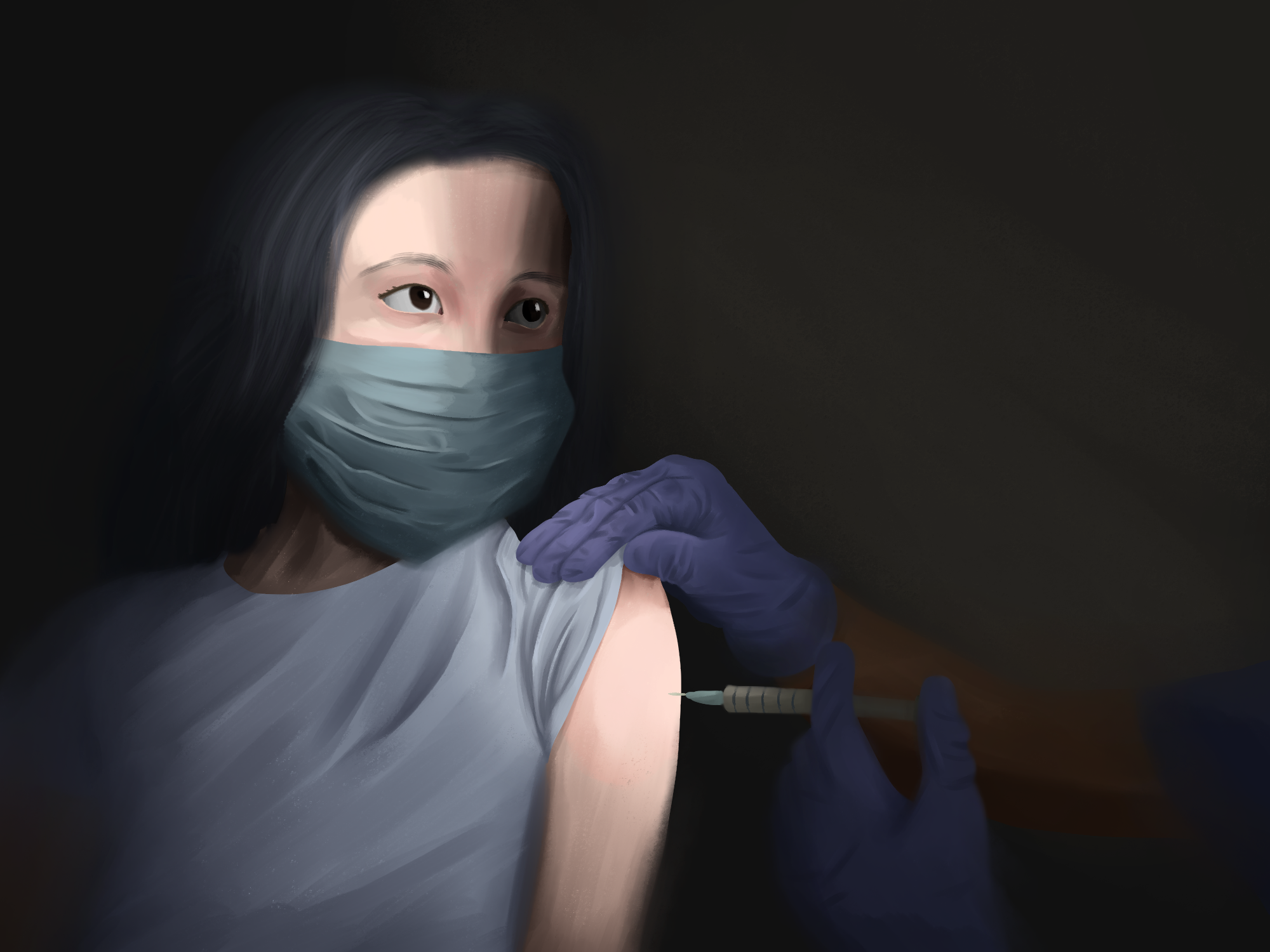
THE ART
Admittedly I don’t post much of my art online and this one is actually a few months old by now, but I have the extra time in my life right now so why not? This painting shows a young girl getting a vaccination shot. She looks with heavy eyes towards out of the frame of this canvas. I had a good time painting this and used different techniques to establish more atmosphere and focal points in this image. Honestly this is one of the paintings I actually enjoyed more rather than this painting feeling like a chore.
HISTORY ON VACCINES
People long noticed that if you survived a disease once, you usually didn’t get it again. So humanity came up with a clever idea, Why don’t we train the immune system so the body is protected without having to suffer the full disease? That observation led to early practices to produce a mild, controlled infection and create protection. One of the oldest of these was variolation. Some of the earliest records of variolation come from 10th century Song China, where healers worked out ways to reduce smallpox’s danger. They dried material from smallpox sores, ground it to a powder, and sometimes blew it into the nose or scratched it into the skin. The aim was the same as modern vaccines, give the immune system a preview of the germ so it can learn to fight it.
Variolation was risky, some people still became seriously ill, but it was much safer than catching smallpox naturally, which killed about 33% of those infected compared to 2% of variolation. Throughout the centuries this technique would spread within Eurasia. After over 500 years it finally reached Europe when the technique was introduced in the mid 17th century Ottoman Empire; and soon afterwards in the early 18th century, Lady Mary Wortley Montagu brought the practice to the West after a long diplomatic visit to the Ottoman Empire. This practice quickly spread across the Western World reaching every republic, kingdom, and colony and despite the slight risk of infection, variolation campaigns were already being used. This was also the century of the Enlightenment and humanity was growing a mindset towards a scientific/rational worldview over a mystical one.
If there is one name every human should know it is EDWARD JENNER!!! This man is the definition of a hero! His discovery has saved billions. To give a recap Jenner has noticed over the decades as he practiced medicine that milkmaids who had caught cowpox, a mild disease in cows, seemed protected from deadly smallpox. He tested this observation by exposing people to cowpox material and then to smallpox; those who’d had cowpox did not get sick. This was the breakthrough that led to the first true vaccine. The word “vaccine” even comes from vacca, the Latin word for cow. In 1798 he published An Inquiry into the Causes and Effects of the Variolae Vaccinae. This was an early scientific journal that not only documented his research, but also gave a scientific explanation for the origin of smallpox (which although inaccurate is still somewhat correct on where he was going), and even more surprising gave precautious towards misinformation and incorrect medical practices that don’t lead to vaccination (something we can still use today).
Although misinformation and anti-vaxxers soon appear (some genuine concern but a lot of fearmongering as well) the practice quickly spread in the Western World as this had one major advantage over variolation. The risk of death was almost zero. Napoleon began a large vaccination campaign in his empire with vaccination being mandatory for military service. The Spanish launched the first global healthcare effort with the Balmis Expedition in order to vaccinate subjects all across their colonies. A few decades later, America would launch its first smallpox vaccination campaign, not for US Citizens but surprisingly for American Indians with the Indian Vaccination Act of 1832. Many countries in this time also were quick adaptors of mandating vaccines for children, such as The Vaccination Act of 1853 in Britain which required vaccines for all British children. Health conditions back then were not as advanced as now and deadly diseases were far more visible, so countries were quick to adapt new measures to prevent outbreaks, something many people forget in our all too safe modern world.
As medical knowledge advanced, so did vaccines. New tools like syringes, refrigeration, and cell culturing made vaccines safer to produce, easier to store, and possible to transport in large quantities across countries and continents. These practical innovations were just as important as scientific discoveries themselves. Over the 20th century, vaccines against polio, measles, diphtheria, tetanus, and many other diseases led to dramatic declines in illness and death worldwide. Hospitals that once overflowed with children suffering from preventable diseases began to see those cases disappear. The success was so remarkable that smallpox, once one of humanity’s greatest and deadliest fears, was completely eradicated through a coordinated global effort. Polio has also been pushed to the brink of extinction, with only a handful of cases remaining in a few parts of the world.
MODERN mRNA VACCINES
Vaccine technology has advanced dramatically in recent decades. In the past, making a vaccine often meant growing and weakening a virus in a lab, a process that could take years. Today, newer tools like mRNA vaccines allow scientists to design protection much faster. Instead of using the whole virus, mRNA vaccines give the body temporary instructions to make a harmless piece of it, teaching the immune system how to respond. The instructions quickly break down and do not change your DNA. This speed and flexibility make it possible to respond more quickly to new outbreaks. You may have heard about it during the COVID-19 Pandemic, but this technology has already expanded and is being used to improve vaccines for flu, RSV, and other diseases.
THE IMPORTANCE OF VACCINES
- They save lives. Vaccines prevent millions of deaths every year by stopping diseases before they can harm people.
- They protect communities. When all people are vaccinated in an area, germs have nowhere to spread. That community will end up being safer and have a lower mortality rate due to a lower risk of disease.
- They stop outbreaks. High vaccine coverage makes outbreaks rare. When coverage drops, old threats come back, as we see with measles.
- They improve public health and longevity. Fewer infections mean fewer hospital stays, less long-term disability, and healthier societies overall. Thus reducing cost, time, and labour for everyone involved.
- They can eradicate diseases from Earth. As seen with smallpox and very soon polio.
Even as someone who deeply value personal autonomy and individual choice, I still find it important for us to recognize that infectious diseases don’t care about our opinions, laws, or beliefs. Their only goal is biological opportunity. Viruses spread wherever they can. It’s often said that the best way to prevent something from happening is for it to not occur in the first place. And this is especially true for medicine. Cures are difficult, time-consuming, and far more complex. The most effective way to stop them isn’t scrambling for a cure after people are already sick, but preventing illness in the first place. Prophylaxis like vaccines are very simple and extremely powerful. In many cases, one pinch from a needle can be enough to prevent the biggest baddest disease from ever harming you.